
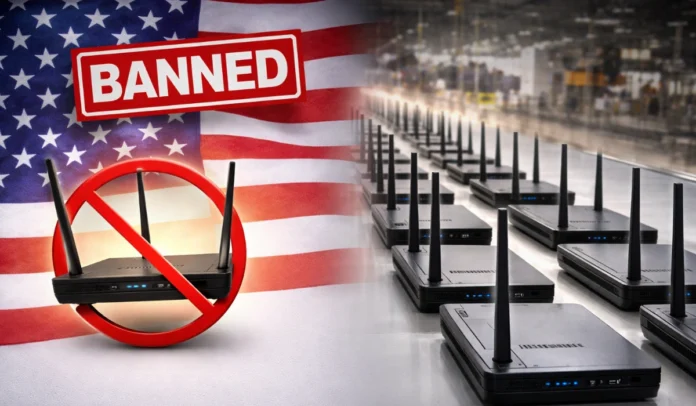
The US Federal Communications Commission has banned approval of all new consumer-grade internet routers made in foreign countries.
The FCC added these routers to its Covered List on March 23. This step stops new models from getting the equipment authorization needed to enter the US market.
The decision follows a review by a White House group with national security experts. The group found that routers produced outside the United States create unacceptable risks to national security and the safety of Americans.
These risks include supply chain weaknesses that could disrupt the economy, critical infrastructure, and national defense. They also include serious cybersecurity threats that foreign actors could use to attack US systems or harm people directly.
The ban covers new router models only. People can continue to use routers they already own. Companies with existing FCC approvals for specific models may still import and sell those exact products.
FCC Chairman Brendan Carr said the action protects American networks from foreign threats. Manufacturers can seek conditional approval from the Department of Homeland Security or Department of War if they show their routers do not pose such risks.
Most popular consumer router brands, including TP-Link, Netgear, Asus, and Linksys, Tejas Networks, HFCL, produce their devices outside the United States, mainly in Asia. Very few routers sold in the US are made domestically.
This move builds on earlier FCC actions against specific Chinese firms such as Huawei and ZTE. Those companies already face strict limits on their equipment.
The router sector forms a key part of home and small office internet access across the country. The ban aims to reduce vulnerabilities in everyday networking devices while encouraging safer supply chains for future products.
