
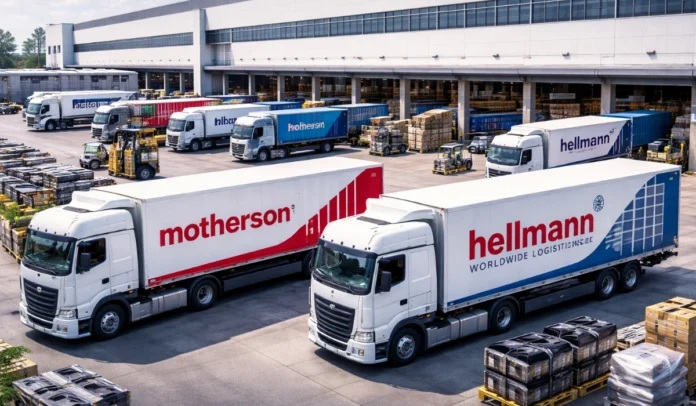
Samvardhana Motherson International Limited has entered into a strategic partnership with Hellmann Worldwide Logistics to strengthen end-to-end supply chain services for the global automotive industry.
The collaboration comes as automakers face increasing pressure to manage complex supply chains, reduce delays, and improve efficiency amid shifting global demand and disruptions. The partnership is expected to benefit vehicle manufacturers and suppliers by streamlining logistics and improving coordination across production networks.
According to a joint company statement, the partnership will offer integrated solutions covering inbound logistics, intra-plant material handling, outbound vehicle transportation, and aftermarket parts distribution. Officials said the combined services aim to improve visibility, reduce lead times, and optimise costs across supply chains.
The companies plan to initially focus on major automotive markets in Europe, North America, and India, with further expansion into other regions over time.
“This partnership brings together strong manufacturing and logistics capabilities to deliver more agile and reliable solutions to our customers,” said Vivek Chaand Sehgal, Chairman of Motherson.
Reiner Heiken, Chief Executive Officer of Hellmann Worldwide Logistics, said the collaboration will help deliver better value by combining global freight expertise with automotive-focused logistics solutions.
Automotive supply chains involve multiple stages, including sourcing components, managing factory operations, and distributing finished vehicles and spare parts. Efficient coordination across these stages is critical, especially as companies adopt just-in-time and just-in-sequence systems that depend on precise delivery schedules.
The partnership reflects a broader trend in the industry, where manufacturers and logistics providers are working more closely to handle disruptions such as semiconductor shortages, geopolitical tensions, and the transition to electric vehicles.
For suppliers and logistics operators, the tie-up could open new opportunities in integrated services, while helping customers manage costs and improve delivery timelines across global markets.
However, analysts note that integrating operations across regions and aligning systems between partners may take time and require careful execution.
The companies will now begin implementing joint solutions for customers, with early results expected as services roll out across key markets in the coming months.
