
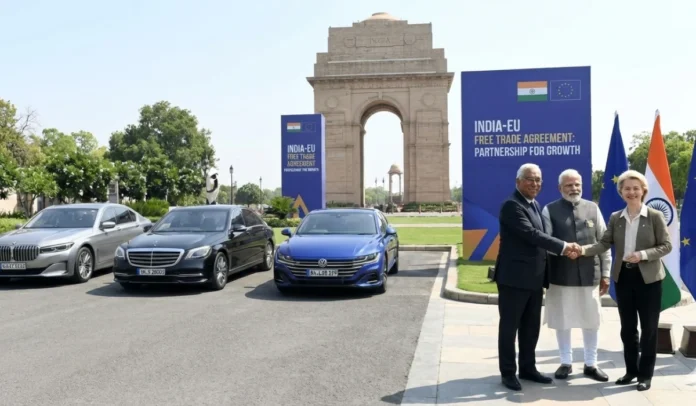
India is set to significantly reduce import duties on cars from the European Union to 40% from the current peak of 110%, according to people familiar with the matter, in a major concession aimed at advancing a long-stalled free trade agreement with the 27-nation bloc.
The proposed tariff cut would apply immediately to a limited quota of about 200,000 combustion-engine cars per year imported from the EU, the sources said. This marks one of the most substantial openings of India’s protected automotive market in recent years and could pave the way for luxury European brands such as BMW, Mercedes-Benz, Audi, and Volkswagen to become more affordable for Indian buyers.
Current Indian import tariffs on fully built passenger vehicles can reach as high as 110% for cars priced above certain thresholds, including high customs duties, integrated goods and services tax, and other levies. The high barriers have long been a sticking point in negotiations for a comprehensive India-EU free trade agreement, which began in 2007 and have faced repeated delays over issues ranging from market access to labour standards and environmental rules.
The tariff reduction proposal comes as both sides intensify efforts to conclude the deal. EU officials have repeatedly highlighted automobiles as a key area where greater access to the Indian market is essential, while India has sought better terms for its exports of textiles, pharmaceuticals, and IT services, as well as protection for its domestic auto industry.
Under the planned move, the lower 40% duty would initially cover a capped number of imports to limit any sudden disruption to local manufacturers. Sources indicated that electric vehicles could see even more favourable treatment in the broader agreement, potentially aligning with India’s push to accelerate EV adoption and attract foreign investment in battery and clean mobility sectors.
The development follows recent progress in talks, with both sides expressing optimism about wrapping up core issues soon. A successful India-EU FTA would create one of the world’s largest bilateral trade pacts, covering goods, services, investment, and intellectual property rights, and boost two-way commerce that currently stands at around $120 billion annually.
Domestic automakers have expressed concerns about the potential impact on local production and jobs, though government officials maintain that safeguards such as quotas and phased implementation would protect Indian industry while opening doors for technology transfer and premium segment growth.
The tariff adjustment, if implemented, could make popular European models more competitive in India’s fast-growing luxury and premium car segment, where demand has risen steadily among urban consumers. It would also signal India’s willingness to liberalise key sectors to secure strategic trade partnerships amid global supply chain shifts.
Negotiators from both sides continue to meet to finalise remaining details, with expectations that an announcement on the broader deal could come in the coming months.
