

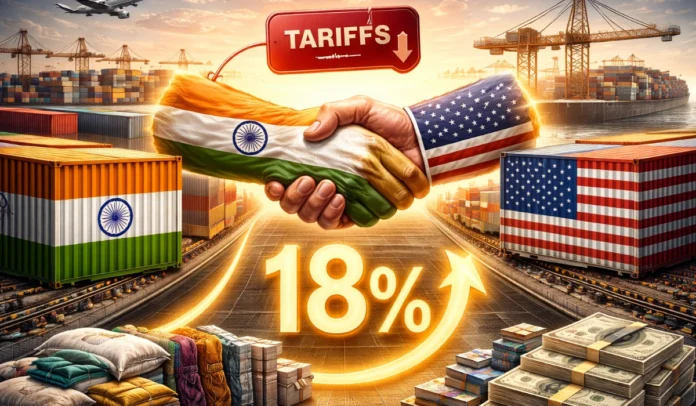
The United States and India have agreed to a significant trade deal that reduces US tariffs on Indian imports to 18% from previous levels of 25% reciprocal tariffs, with additional punitive duties waived, US President Donald Trump announced on Monday following a phone conversation with Prime Minister Narendra Modi.
Trump made the announcement on his social media platform Truth Social, describing the agreement as effective immediately and driven by “friendship and respect” for Modi. He stated that the US would apply a reduced reciprocal tariff of 18%, down from 25%, while India committed to lowering its tariffs and non-tariff barriers on US goods to zero. Trump also claimed India agreed to halt purchases of Russian oil and instead increase buys from the US and potentially other sources, alongside commitments to purchase over $500 billion worth of American energy, technology, agricultural products, coal, and other goods.
The deal ends months of trade tensions that had seen high tariffs imposed on Indian exports, partly linked to India’s energy imports from Russia amid the Ukraine conflict. A White House official confirmed the US is rescinding a 25% punitive duty tied to those purchases, bringing the effective rate down sharply and giving Indian goods a competitive edge over rivals like China, Vietnam, and Bangladesh in the US market.
Prime Minister Modi responded positively on X, expressing delight that “Made in India” products would now face reduced tariffs of 18% in the US market. He thanked Trump for the agreement and highlighted its role in fostering global peace, stability, and prosperity through stronger bilateral ties. Indian officials noted the pact includes increased access for US products in sectors such as petroleum, defence equipment, electronics, pharmaceuticals, telecom, and aircraft, with some openings in agriculture.
The agreement provides immediate relief to Indian exporters in textiles, apparel, pharmaceuticals, chemicals, footwear, jewellery, and food items like shrimp. Industry groups such as the Federation of Indian Export Organisations welcomed the move, saying it levels the playing field and boosts competitiveness. Indian stock markets surged in early trading on Tuesday, with benchmark indices rising sharply on the news.
Details on implementation timelines, specific sector commitments, and the exact scope remain limited, with some aspects described as the first phase of broader negotiations toward a more comprehensive bilateral trade pact. Experts note the deal signals a thaw in relations after periods of strain and could encourage further investment and supply chain integration between the two economies.
Both sides emphasised the personal rapport between the leaders as a key factor in reaching the accord quickly. The pact is seen as a step toward the earlier “Mission 500” goal of doubling bilateral trade to $500 billion by 2030.
