

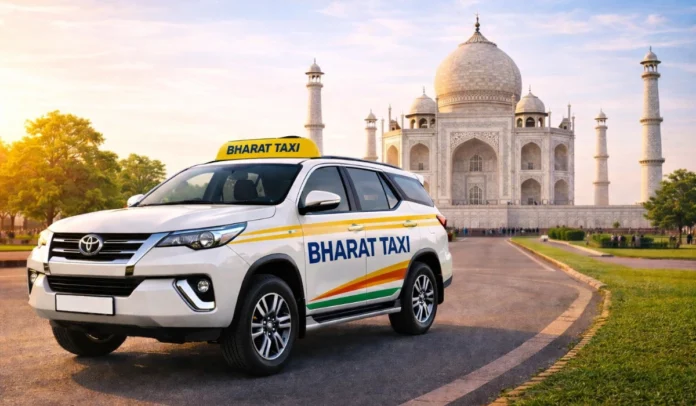
Union Home and Cooperation Minister Amit Shah officially launched Bharat Taxi on Thursday, introducing India’s first cooperative-led ride-hailing platform. The service, backed by the Ministry of Cooperation, aims to change the way cab drivers work by making them owners rather than contractors in a zero-commission model.
Bharat Taxi operates under Sahakar Taxi Cooperative Limited, a multi-state cooperative society registered in June 2025. It follows the government’s ‘Sahkar se Samriddhi’ vision of using cooperatives for economic empowerment. Drivers, called Sarathis, become stakeholders by holding shares in the cooperative. This gives them a direct share in profits, social security benefits like pension and insurance, and a say in operations.
The platform promises no surge pricing and no commission cuts on fares. Drivers pay only a small fixed daily fee of around ₹30 to use the app. This structure allows them to keep nearly all earnings from each ride. Officials claim fares could be up to 30 per cent lower than private aggregators, making rides more affordable for passengers.
The app supports bookings for cabs, autos, and bike taxis in categories like economy, sedan, XL, and priority. It launched after a successful two-month pilot in Delhi-NCR and Gujarat. Over 300,000 drivers have already joined, with plans to expand across the country within two to three years.
Amit Shah described the service as a step toward driver dignity and fair earnings. He emphasised that “Sarathi hi malik” the driver is the owner highlighting the shift from exploitative aggregator models to collective ownership. The initiative includes safety features like the ‘Sarathi Didi’ program for women drivers and passengers.
Bharat Taxi competes directly with private players like Ola, Uber, and Rapido. It focuses on transparency, predictable pricing, and long-term benefits for drivers. While not directly run by the government, the strong backing from the Ministry of Cooperation and support from major cooperatives like Amul give it credibility and reach.
The launch marks a fresh approach to India’s ride-hailing sector, blending cooperative principles with modern technology. As rollout continues, it will test whether a driver-owned model can gain traction in a market dominated by commission-based platforms.
