
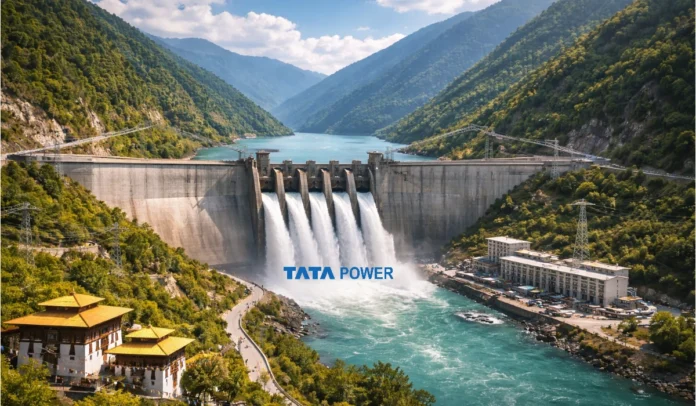
The World Bank Group has approved $815 million in long-term financing for the 1,125-megawatt Dorjilung hydropower project in Bhutan, a major clean energy development backed by India’s Tata Power and Bhutan’s state-owned Druk Green Power Corporation.
The Dorjilung project will be built on the Kurichhu River in eastern Bhutan and is designed as a run-of-the-river scheme with six generating units of 187.5 MW each, according to project details.
The plant will include six-hour pondage to allow daily peaking operations and is expected to generate more than 4,500 gigawatt-hours of electricity annually once fully commissioned.
Around 80% of the power produced will be exported to India, supporting renewable energy supply and cross-border electricity trade between the two countries.
The project is being implemented by Dorjilung Hydro Power Limited, a special purpose vehicle in which Druk Green Power Corporation holds a 60% stake, while Tata Power owns the remaining 40%, making it Bhutan’s largest public-private partnership in the hydropower sector.
Tata Power has an existing presence in Bhutan’s power sector through the 126-MW Dagachhu project and the under-construction 600-MW Khorlochhu hydropower project.
The World Bank financing package includes a mix of grants, concessional credits and loans aimed at supporting project viability and affordability.
It comprises a $150 million grant and a $150 million credit from the International Development Association to the Bhutanese government, as well as enclave loans from the International Bank for Reconstruction and Development and a $300 million loan from the International Finance Corporation to the project company.
The total cost of the Dorjilung project is estimated at about $1.7 billion, with the remaining funding to be met through equity contributions and other borrowings.
Construction is expected to pick up following the financing approval, with commercial operations targeted for September 2031, according to project timelines.
The project is expected to create several thousand jobs during construction and provide long-term economic benefits to eastern Bhutan, officials said.
The run-of-the-river design avoids large reservoirs and is expected to reduce environmental impact compared with storage-based hydropower projects, with environmental and social safeguards incorporated as part of the World Bank approval process.
Bhutan Prime Minister Tshering Tobgay has described the project as a key step in advancing the country’s renewable energy strategy while maintaining its carbon-negative status.
