
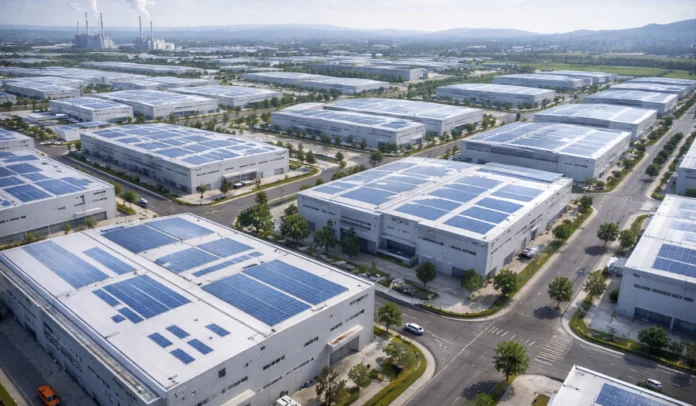
Union Cabinet approved the Bharat Audyogik Vikas Yojna (BHAVYA) on March 18 with an outlay of ₹33,660 crore to develop world-class industrial parks that offer plug-and-play facilities.
This scheme arrives as India works to boost manufacturing under its Make in India push and aims to create jobs amid global supply chain shifts. It affects businesses seeking faster setup, state governments partnering on projects, and workers who may gain employment in new industrial zones.
According to the Press Information Bureau release and statements from Union Minister Ashwini Vaishnaw, the program will establish industrial parks sized between 100 and 1,000 acres. These parks will come with pre-approved land, basic infrastructure such as roads, power, water, and single-window clearances. The government plans implementation in partnership with states and private players.
The scheme focuses on reducing entry barriers for investors. Official announcements indicate it will promote manufacturing by providing ready ecosystems instead of raw land that requires years of preparation.
“The Bharat Audyogik Vikas Yojna marks a new era of plug-and-play industrial development, enabling faster project execution and higher investment inflows,” said Ashwini Vaishnaw, Union Minister for Information and Broadcasting, Electronics and IT, after the cabinet briefing.
Plug-and-play industrial parks mean companies can start operations quickly without building utilities or waiting for approvals. Traditional industrial areas often face delays from land acquisition, environmental clearances, and infrastructure gaps. BHAVYA addresses these by preparing sites in advance.
The initiative builds on earlier efforts like industrial corridors and special economic zones. It aligns with India’s goal to raise the manufacturing sector’s share in GDP and create large-scale employment.
For people in states like Rajasthan, Gujarat, Uttar Pradesh, and others likely to host these parks, the scheme could bring direct benefits. A factory worker or technician in a rural area near a new park might shift from seasonal farm work to steady industrial jobs with better pay and training. Families in nearby towns could see improved local economies through shops, services, and housing demand.
Some industry observers note potential challenges. Land availability, coordination between central and state governments, and ensuring private participation remain key concerns, analysts say.
The government will now work with states to identify locations, finalize partnerships, and begin development. Progress on park approvals, land allocation, and first investor commitments will serve as early indicators of the scheme’s rollout in the coming months.
