
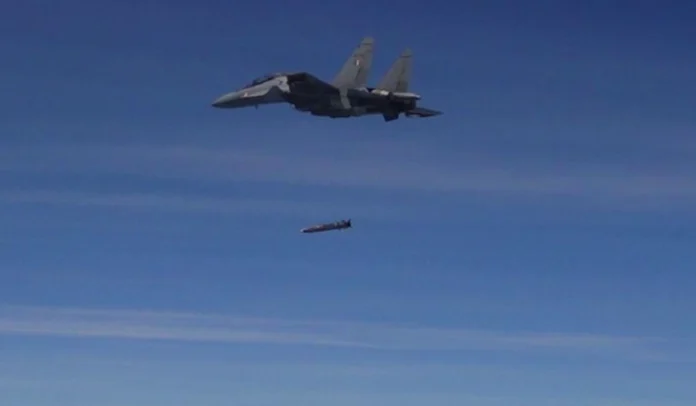
Defence Research and Development Organisation (DRDO) and the Indian Air Force have successfully carried out flight tests of the RudraM-II air-to-surface missile from a Su-30 MKI fighter aircraft.
The tests took place at the Integrated Test Range off the coast of Odisha. The missile met all its mission objectives, including target accuracy and performance parameters.
RudraM-II is an indigenously developed supersonic air-to-surface missile. It features improved range and a more powerful seeker system compared to the earlier RudraM-I version. The missile is designed to strike high-value ground targets such as enemy air defence systems, radars, and infrastructure from a safe distance.
A senior DRDO official said the successful test marks a major milestone in the missile’s development. He added that the weapon will significantly enhance the Indian Air Force’s ability to conduct precision strikes.
The missile uses an advanced propulsion system and can fly at supersonic speeds. It has a reported range of over 300 km and carries a heavy warhead suitable for both strategic and tactical missions. It can be integrated with various fighter aircraft platforms.
Defence Minister Rajnath Singh congratulated DRDO and the Indian Air Force on the achievement. He described the test as an important step towards strengthening India’s indigenous defence capabilities.
The RudraM series forms part of India’s efforts to build a family of long-range strike weapons. These missiles support the Indian Air Force’s requirement for modern standoff weapons that reduce risk to pilots and aircraft. The successful test of RudraM-II brings the country closer to operational induction of the system. It also demonstrates continued progress in India’s push for self-reliance in critical defence technologies.
